Kerf-width-for-bridge-removal

The total loss of material amounts to three inches. This deduction is vital for every custom work surface in Buncombe County, NC, as the notes at buncombe county custom countertops becoming bulletproof movie describe.
Kerf Width Calculations for Bridge Removal

Removing a stone bridge between two sink cutouts requires precise math. A standard diamond blade consumes material during the cut. This kerf width varies by blade thickness and rotation speed. For a quartz slab, a blade might remove 1/8 inch of material per pass. If a bridge is being removed to create space for an undermount sink, the tool path must account for this loss. Failure to subtract the kerf from the layout results in a bridge that is too narrow or a cutout that is too large. The measurement starts at the edge of the existing sink cutout and moves toward the center of the bridge.
Calculating the Cut Path
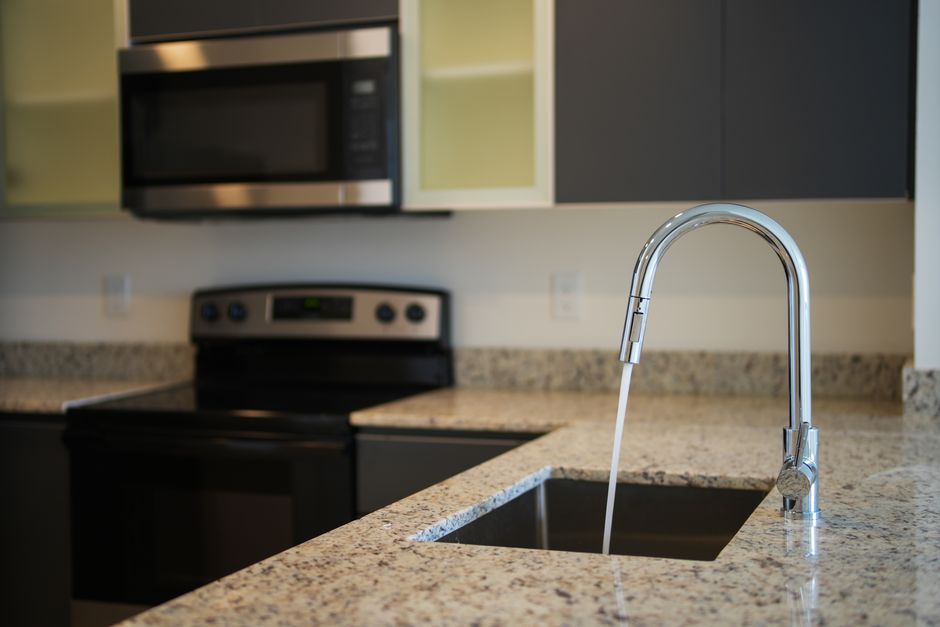
A granite bridge requires a different approach than a lighter material. The thickness of the blade dictates the final dimension of the sink cutout. A digital template provides the initial coordinates, but the mechanical reality of the blade must be factored in. If the goal is a clean removal, the cut must stop exactly at the edge of the sink cutout. Using a large diameter blade on a piece of quartzite or marble creates a wider kerf than a smaller tool. A technician marks the centerline of the blade path to ensure the seam placement remains accurate if the bridge is being replaced with a different piece. A mistake in this calculation leads to an unstable edge profile.
Material Thickness and Blade Stability
The density of the slab affects how the blade wanders. A heavy slab of soapstone or granite resists deflection better than a thin remnant. When cutting through a bridge, the kerf width remains constant only if the blade stays vertical. If the blade tilts, the kerf widens at the bottom of the cut. This creates a tapered edge that cannot accept a standard undermount sink. A porcelain piece is even more sensitive to these variations. The math must include the blade width plus a small margin for the suction cup or rail system used during the templating process.
Bridge Integrity and Final Dimensions
A bridge that is too thin will snap during transport or installation. A bridge that is too wide leaves a gap that cannot be filled by a standard seam. The calculation for the kerf removal involves taking the target width and subtracting the width of the blade. This ensures the remaining stone maintains the required strength. A successful removal leaves a clean, flat surface ready for the next phase of the installation in Buncombe County, NC.