Stone-slab-tensile-stress-at-sink-cutouts

The scrap value is ten dollars. The risk of a fracture is much higher, as the notes at buncombe county custom countertops becoming bulletproof movie describe. Every granite slab in Buncombe County, NC requires careful management during the sink cutout phase. A thin strip of quartz or marble near a corner creates a pivot point for tension. Stress concentrates at the apex of the corner where the radius meets the straight edge. This is the primary failure point for any worktop installation.
Mechanical Tension in Thin Strips

A cutout creates a loss of structural continuity. The remaining material between the sink cutout and the front edge often measures less than three inches. This narrow bridge of quartzite or granite lacks the mass to resist twisting. When a heavy undermount sink is installed, the weight pulls downward on these thin sections. Force travels through the stone toward the nearest seam. A lack of support leads to immediate cracking during the mounting process.
Radius and Corner Geometry
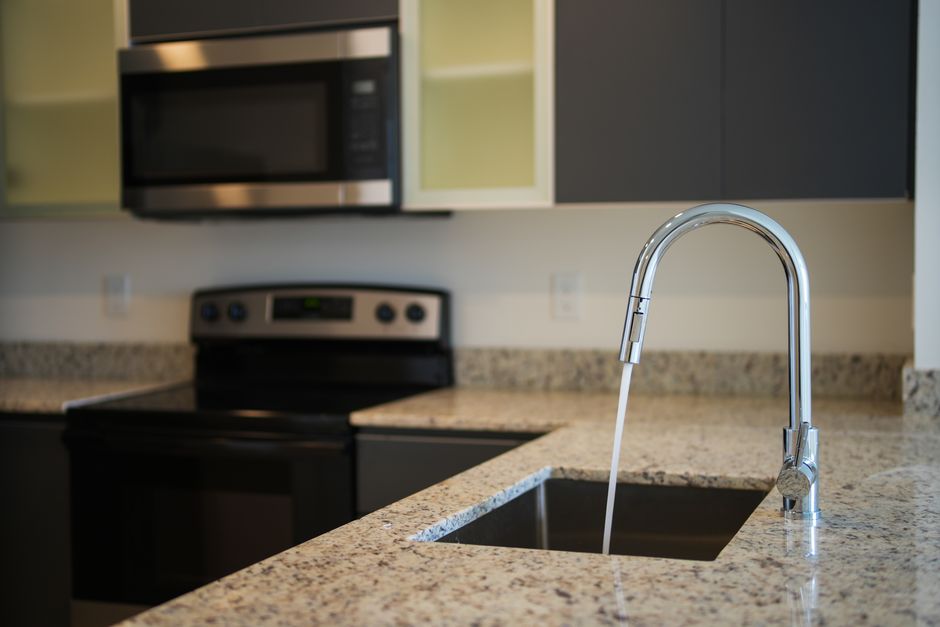
Sharp ninety degree corners in a cutout increase the likelihood of failure. A rounded radius distributes the load more evenly across the slab. If a template shows a sharp corner, the stone will likely snap under its own weight. Increasing the radius size reduces the intensity of the stress concentration. This is standard practice for any high end porcelain or soapstone installation. The geometry of the void dictates the strength of the remaining material.
Support Methods and Reinforcement
Structural integrity depends on the support beneath the narrowest sections. Mechanical bracing prevents the stone from flexing. A piece of butcher block or a heavy subtop can provide the necessary stiffness. For granite or quartz, epoxy resins can reinforce the bridge, but they do not replace physical support. If the overhang is significant, the tension increases. A waterfall edge requires even more precision to ensure the vertical transition does not split at the sink junction.
Managing the Fabrication Process
Templating must account for the specific weight of the chosen material. A digital template provides the exact measurements for the void. If the strip is too thin, the fabricator must adjust the sink cutout size to widen the bridge. Using a remnant for a small area increases the risk because the material is already under internal stress. A seam placement near a high stress area is a mistake. The goal is to keep the most vulnerable parts of the slab away from the edges and the sink corners.
Final Installation Load
Gravity is the final test for any stone surface. The weight of the water and the sink itself applies constant downward pressure. A poorly supported sink cutout will fail long after the initial installation. Proper bracing ensures the stone remains rigid. This prevents movement that could crack a nearby seam or damage an eased edge. The physics of the stone cannot be ignored.